
Opening a bottle of wine should be an enjoyable experience, not a frustrating task. However, traditional corkscrews can require considerable hand strength, precise positioning, and repeated effort. A charged electric wine bottle opener offers a more convenient approach by combining rechargeable power with automatic cork removal. Whether used at home, in restaurants, or during social gatherings, this practical accessory can make serving wine simpler and more comfortable.
Understanding its features, charging requirements, performance, and maintenance can help buyers choose an electric wine opener that delivers reliable everyday convenience.
Wine is often associated with relaxation, celebrations, dining, and hospitality. Yet opening a bottle can sometimes become an inconvenient part of the experience. Traditional corkscrews require users to insert a spiral into the cork and apply enough force to extract it. For people with limited hand strength or those who frequently open wine bottles, this process may become uncomfortable.
A charged electric wine bottle opener addresses this problem by using a small electric motor to remove the cork automatically. Instead of relying on repeated twisting and pulling, users generally need to position the opener correctly and press a button.
Manual corkscrews require coordination between hand strength and rotational movement. Electric models reduce much of this physical work, making wine opening easier for older adults, casual wine drinkers, and people who prefer a more accessible experience.
In restaurants, hotels, and hospitality environments, staff may need to open multiple bottles throughout a service period. An electric opener can simplify repetitive tasks and help create a smoother serving process.
Convenience is an important part of modern product design. A rechargeable electric wine opener combines functional operation with a contemporary appearance, making it both a useful household accessory and a potential gift item.
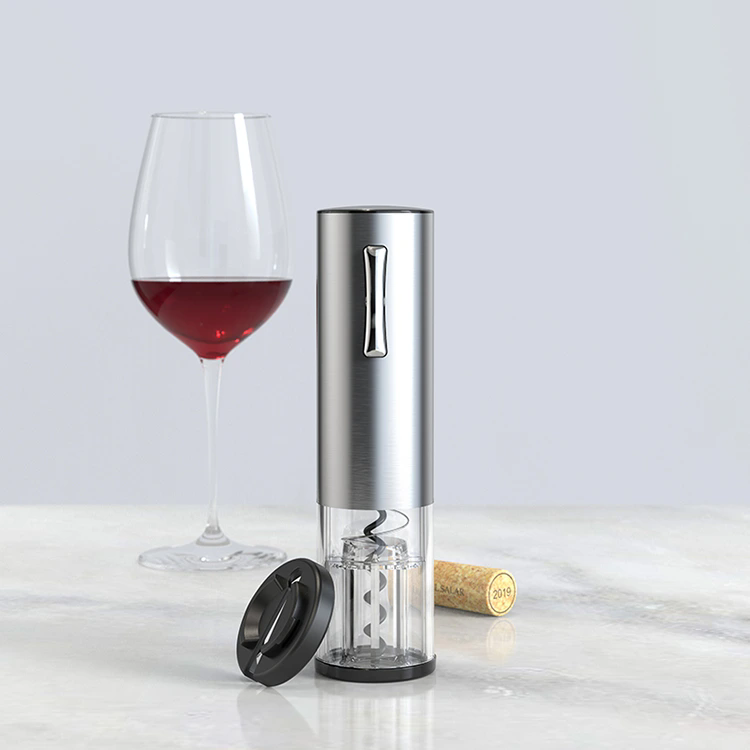
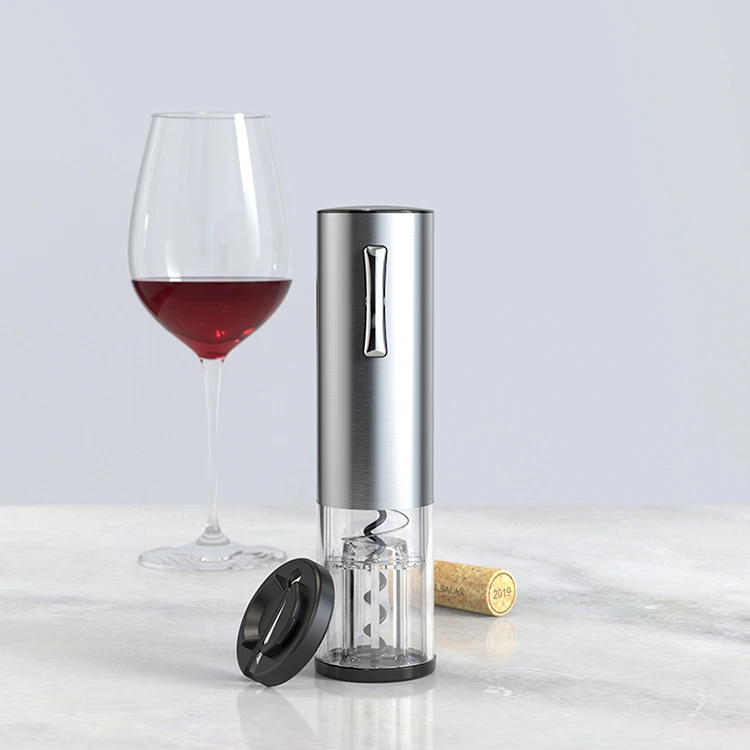
An electric wine bottle opener typically contains a rechargeable battery, an electric motor, a corkscrew mechanism, and operating buttons. These components work together to remove a cork with minimal manual effort.
The user places the opener vertically over the wine bottle after removing the foil covering the cork. Proper alignment is important because an opener positioned at an angle may cause the corkscrew to enter unevenly.
When the extraction button is pressed, the motor rotates the internal spiral into the cork. The mechanism gradually grips the cork and begins pulling it upward.
The motor continues operating until the cork is extracted. The precise operating time depends on the device design, cork condition, and motor performance.
Most electric models include a reverse or release function. This action rotates the mechanism in the opposite direction, allowing the removed cork to come out of the opener.
Although operating mechanisms vary between models, the basic principle remains the same: electrical energy powers a motor that performs the repetitive mechanical work of cork extraction.
Not every electric wine opener offers the same experience. When comparing products, buyers should look beyond appearance and consider the features that influence usability, reliability, and long-term satisfaction.
A rechargeable battery eliminates the need to replace disposable batteries regularly. Depending on the model, charging may be completed through a USB connection or another compatible charging system.
Buyers should check battery capacity, charging time, charging indicators, and the manufacturer's stated operating cycles.
Simple controls make an electric opener easier to understand. Separate extraction and release buttons can reduce confusion and help users operate the product correctly.
A comfortable grip improves control during operation. The body should be easy to hold, appropriately balanced, and designed to accommodate different hand sizes.
Some models feature a transparent section that allows users to observe the cork extraction process. This can make operation easier to understand and adds visual appeal.
Charging and operating indicators help users identify the device's working status. A clear charging indicator can reduce uncertainty about whether the battery is ready for use.
Depending on the product configuration, accessories may include a foil cutter, charging cable, storage base, or gift packaging. These additions can improve the overall product experience.
| Feature | Practical Function | Buyer Benefit |
|---|---|---|
| Rechargeable Battery | Provides electrical power | Convenient repeated use |
| One-Button Control | Activates automatic extraction | Simple operation |
| Ergonomic Housing | Improves handling comfort | Better grip and control |
| LED Indicator | Displays operating or charging status | Easier monitoring |
| Transparent Window | Shows the internal extraction process | Improved visibility |
| Foil Cutter | Removes bottle foil | More convenient preparation |
A charged electric wine bottle opener is suitable for more than occasional home use. Its convenience can benefit several types of users and purchasing environments.
People who enjoy wine at home often value products that make daily routines simpler. An electric opener removes much of the physical effort involved in opening a bottle and can be stored conveniently alongside other kitchen accessories.
Hospitality businesses depend on efficient service and a positive customer experience. An electric opener can help staff handle bottle opening with less manual effort, especially during busy dining periods.
When hosting family gatherings, celebrations, or dinner parties, convenience matters. A charged electric opener allows hosts to prepare wine without spending time struggling with a traditional corkscrew.
Modern wine accessories are popular gift options for birthdays, weddings, anniversaries, holidays, and housewarming occasions. A rechargeable electric opener can offer a practical combination of appearance and functionality.
Businesses seeking promotional gifts or hospitality accessories may consider electric wine openers as part of their product collections. Packaging, branding opportunities, product consistency, and purchasing quantities can all influence the selection process.
The word "charged" is particularly important when discussing an electric wine bottle opener. Unlike a manual corkscrew, an electric model depends on stored electrical energy. Its convenience therefore depends partly on battery performance and proper charging habits.
Users should check the charging indicator before opening wine bottles, particularly before parties or events. A low battery may prevent the motor from completing the extraction process effectively.
Always use a compatible charging cable and power source recommended by the manufacturer. Charging requirements can vary according to battery type and electronic design.
Rechargeable batteries have a finite service life. Following the manufacturer's charging instructions and avoiding unnecessary exposure to extreme temperatures can help maintain battery performance.
Battery capacity influences how much energy is available for operation. However, capacity alone does not determine the number of bottles an opener can handle. Motor efficiency, mechanical resistance, battery condition, and operating conditions also matter.
| Battery Consideration | What Buyers Should Check |
|---|---|
| Battery Capacity | Whether it meets the intended usage frequency |
| Charging Interface | Compatibility and convenience |
| Charging Time | Manufacturer-tested charging duration |
| Operating Cycles | Verified bottle-opening capacity per charge |
| Battery Protection | Appropriate electrical safety features |
For distributors and importers, battery specifications should be clearly documented. Consistent battery performance is essential for reducing customer complaints and supporting product reliability.
Selecting the right charged electric wine bottle opener requires evaluating practical requirements rather than focusing exclusively on price or appearance.
The motor should provide sufficient torque for normal cork extraction. Stable operation can help reduce incomplete extraction, excessive vibration, and unnecessary mechanical stress.
The outer housing should be durable and comfortable to hold. Common housing materials include ABS plastic and stainless steel components, although the actual material configuration varies by product.
Battery quality affects operating consistency and product lifespan. Buyers should request clear battery specifications and relevant testing information rather than relying on marketing descriptions alone.
A compact, lightweight design is generally easier to store and handle. However, the product should still feel stable during operation.
Electrical products should be evaluated according to applicable market requirements. Importers should check relevant product testing, electrical safety documentation, battery transport requirements, and certifications where applicable.
Retailers and distributors may need attractive packaging, clear operating instructions, and customized branding. These details can influence shelf presentation and the perceived value of the product.
For wholesale purchases, communication quality is an important consideration. Buyers should clarify product specifications, minimum order quantities, sample availability, lead times, packaging options, and quality inspection procedures before confirming an order.
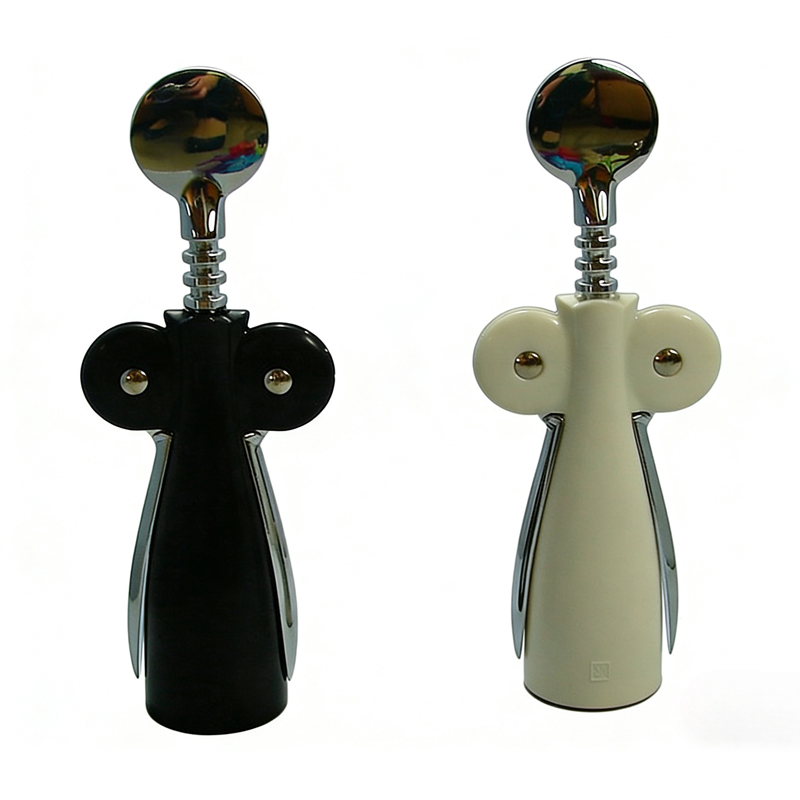
Traditional corkscrews remain popular because they are inexpensive, portable, and do not require charging. However, rechargeable electric models offer a different level of convenience.
| Comparison | Electric Wine Opener | Traditional Corkscrew |
|---|---|---|
| Operation | Motor-powered | Manual |
| Physical Effort | Generally lower | Requires hand strength |
| Power Requirement | Requires charging | No electricity required |
| Operating Method | Usually button-controlled | Manual twisting and pulling |
| Convenience | Suitable for repeated everyday use | Depends on user experience |
| Portability | Depends on size and battery design | Usually compact |
| Maintenance | Requires battery and mechanism care | Generally simple cleaning |
Neither option is universally better. A traditional corkscrew may be suitable for occasional use or travel where charging is inconvenient. An electric model may be more appropriate for households, restaurants, and users who prioritize effortless operation.
Correct operation helps protect the opener, reduce unnecessary strain on the mechanism, and improve the overall experience.
Place the wine bottle on a stable surface. Remove the foil covering the cork using a suitable foil cutter.
Confirm that the opener has sufficient battery power. If the charging indicator shows a low battery, recharge it according to the product instructions.
Position the device directly above the cork. Keep the opener vertical and centered to help the spiral enter correctly.
Activate the extraction function and allow the motor to complete the process. Avoid pulling or twisting the device manually while the motor is operating.
Use the release function to remove the cork from the opener. Follow the manufacturer's instructions for the correct button sequence.
Clean any accessible external surfaces and place the opener in a dry storage location. Keep the charging accessories together to make future use easier.
Regular care helps maintain the appearance and functionality of a rechargeable electric wine bottle opener.
Wipe the exterior using a soft, slightly damp cloth. Avoid immersing the electrical device in water or allowing moisture to enter the motor and charging port.
Keep the corkscrew mechanism free from unnecessary dirt and debris. Follow the manufacturer's cleaning recommendations rather than applying unapproved lubricants or cleaning chemicals.
Excessive moisture and extreme temperatures may affect electronic components and battery performance. Store the opener in a clean, dry location away from direct heat.
Damaged cables and incompatible power sources should be avoided. Inspect the charging accessories periodically and replace damaged components with compatible alternatives.
If the opener will not be used for an extended period, follow the battery storage recommendations supplied by the manufacturer. Appropriate storage conditions can help preserve rechargeable battery health.
Even a well-designed electric wine opener may occasionally experience operating difficulties. Understanding common causes can help users identify simple solutions.
| Common Problem | Possible Cause | Suggested Solution |
|---|---|---|
| Opener does not start | Low battery or charging issue | Recharge and check the power indicator |
| Cork is not fully removed | Incorrect alignment or difficult cork | Stop operation and inspect positioning |
| Motor makes unusual noise | Mechanical obstruction or excessive resistance | Stop using and check the mechanism |
| Cork remains inside the opener | Release function not completed | Follow the recommended release sequence |
| Charging does not work | Damaged cable or incompatible power source | Check compatible charging accessories |
| Reduced operating performance | Battery aging or mechanical wear | Check the battery and seek authorized service |
Users should avoid dismantling the device unless specifically authorized by the manufacturer. Internal electrical components and rechargeable batteries require appropriate handling.
The versatility of an electric wine opener makes it suitable for several personal and commercial environments.
Its compact design can make it a convenient addition to kitchen drawers, countertops, or wine storage areas.
Food service businesses can use electric wine openers to simplify bottle preparation and support efficient service routines.
Hotels and hospitality businesses often look for practical accessories that combine ease of use with an attractive appearance. Electric wine openers can complement dining and beverage service equipment.
Retailers can include rechargeable wine openers in wine accessory collections, gift packages, and seasonal promotions.
Customized wine accessories can provide businesses with an additional gifting option. Product color, logo presentation, packaging, and order quantity may be important considerations for corporate buyers.
For importers, wholesalers, distributors, and retailers, product selection is only one part of the purchasing process. Finding a supplier capable of maintaining product consistency and communicating clearly is equally important.
A reliable supplier should be able to provide detailed product information, clarify available configurations, and explain the quality control procedures used during production.
Buyers should request information about battery capacity, charging methods, housing materials, operating functions, dimensions, and included accessories. Clear specifications make it easier to compare different models accurately.
Product samples allow buyers to evaluate actual operation, appearance, material quality, packaging, and user experience before committing to larger orders.
Depending on production capabilities, customization may include logo printing, product colors, packaging design, and accessory combinations. Buyers should confirm minimum quantities and additional costs in advance.
Battery-powered products should receive appropriate inspections covering charging performance, electrical functions, button operation, mechanical movement, and finished appearance. Buyers should clarify the inspection scope and acceptance criteria before placing an order.
Jinhua Hanjia Commodity Co., Ltd. is a company name buyers can consider when researching suppliers in the commodity and household product sector. When evaluating any potential supplier, purchasers should confirm the specific product range, manufacturing or sourcing capabilities, customization services, and quality documentation directly with the company.
For international buyers, clear communication about specifications, packaging, order quantities, and delivery arrangements helps create a more predictable purchasing process.
A charged electric wine bottle opener is a rechargeable device that uses a motor-powered corkscrew mechanism to remove wine bottle corks. It reduces the manual effort required compared with traditional corkscrews.
The number varies according to battery capacity, motor efficiency, cork resistance, battery condition, and product design. Buyers should refer to manufacturer-tested operating cycle specifications for an accurate estimate.
Charging time depends on battery capacity, charging technology, and the power source. Always consult the manufacturer's specifications for the recommended charging duration.
Many models are designed for common wine bottle corks, including natural and synthetic varieties. However, compatibility depends on the device's extraction mechanism and the condition of the cork. Users should follow the manufacturer's recommendations.
Most models are designed for simple operation. Users generally remove the bottle foil, position the opener vertically, press the extraction button, and activate the release function after the cork is removed.
Incorrect positioning, worn mechanisms, or damaged corks may lead to cork breakage. Keeping the device vertically aligned and following the correct operating procedure can help reduce this risk.
Basic maintenance is recommended. Keep the housing clean, protect the charging port from moisture, inspect the mechanism, and follow the manufacturer's battery care instructions.
Yes. It can be a practical accessory for restaurants and hospitality businesses that regularly serve wine. Buyers should consider battery capacity, operating reliability, charging convenience, and expected usage frequency.
Wholesalers should evaluate product specifications, battery quality, electrical safety documentation, sample performance, packaging, customization options, minimum order quantities, and supplier communication.
Customization depends on the supplier's capabilities and order requirements. Potential options may include logo printing, color selection, packaging design, and accessory combinations. Buyers should confirm availability and minimum quantities directly with the supplier.
A charged electric wine bottle opener offers a practical solution for people who want to enjoy wine without the inconvenience of manual cork removal. Its rechargeable design, motor-powered operation, and user-friendly controls can make wine preparation easier in homes, restaurants, hotels, and social settings.
However, choosing the right product requires more than considering its appearance. Battery performance, motor reliability, material quality, charging convenience, safety documentation, and long-term usability all contribute to a better purchasing decision.
For wholesalers, distributors, and retailers, working with a supplier that understands product requirements and international purchasing expectations can also make a meaningful difference.
Whether you are expanding a wine accessory collection or sourcing practical household products, a carefully selected electric wine opener can be a valuable addition to your product portfolio.
Are you sourcing electric wine openers or exploring new household and lifestyle product opportunities for your business?
Jinhua Hanjia Commodity Co., Ltd. welcomes inquiries from international buyers, wholesalers, distributors, and retail partners.
Contact us to discuss your product requirements, customization possibilities, packaging preferences, and wholesale purchasing needs.
Contact us today and let's explore the right product solutions for your business!
-