
Article Summary: A good wine bottle opener does more than remove a cork. It should provide controlled extraction, comfortable handling, reliable leverage and enough durability for repeated use. A Vintage Economy Wine Bottle Opener is particularly useful for buyers looking for a practical balance between classic appearance, straightforward operation and reasonable cost. This guide explains how the design works, how to use it correctly, what to look for when purchasing in bulk, and how suppliers such as Jinhua Hanjia Commodity Co., Ltd. can support different product requirements.
Understanding the Vintage Economy Wine Bottle Opener
A wine opener may look like a simple household accessory, but its construction directly affects the opening experience. The basic principle behind a traditional corkscrew is straightforward: a metal worm enters the cork, gains a secure grip and then uses leverage or pulling force to remove the stopper from the bottle.
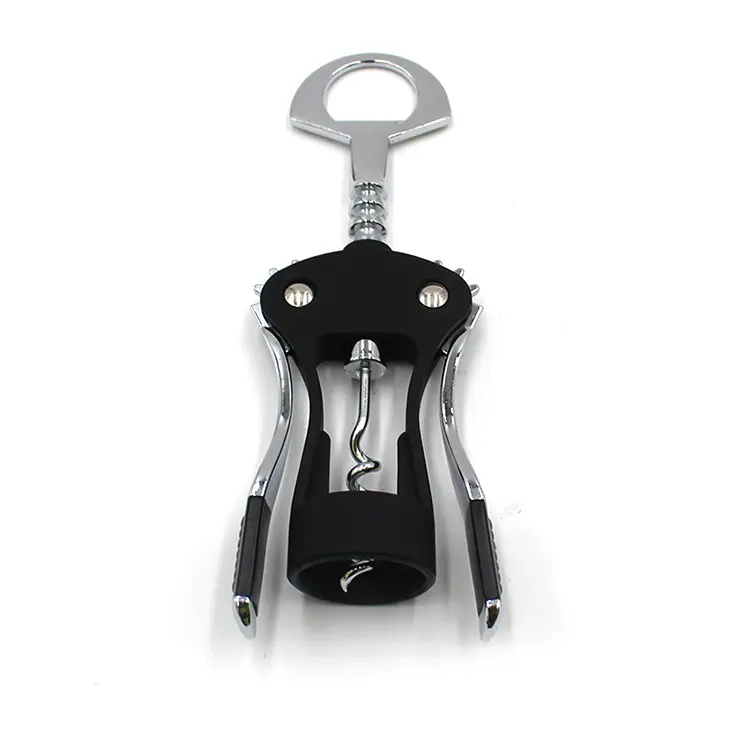
Different wine opener designs change the way that force is applied. Waiter's corkscrews use a hinged lever, winged models use two side levers, while other designs rely on a long handle or mechanical mechanism. These differences affect portability, control, required hand strength and the amount of practice needed. :contentReference
The term Vintage Economy Wine Bottle Opener generally describes a product concept that combines a traditional or vintage-inspired appearance with practical cost control. This makes the category relevant to retailers, promotional-product distributors, hospitality businesses, wine accessory sellers and importers that need a useful product without positioning it as a premium luxury accessory.
The key purchasing idea: economy should mean controlled manufacturing cost, not careless construction. A commercially useful opener still needs a functional worm, dependable joints, comfortable handling and sufficient structural strength for its intended usage.
How the Design Helps With Cork Removal
The effectiveness of a manual wine opener comes from mechanical advantage. Instead of relying entirely on the user's grip strength, the structure transfers hand movement into rotational and lifting force. A well-designed opener therefore feels easier to control even though the basic task remains manual.
The Worm
The spiral metal section, commonly called the worm, is the part that engages with the cork. Its alignment matters. Positioning the worm close to the center of the cork allows the cork to be lifted more evenly and reduces the risk of tearing through one side.
The Handle
The handle provides the surface through which the user applies rotational force. For an economy product, the handle should still offer a stable grip. A compact shape may help with storage and transportation, while an appropriate grip profile can make repeated use more comfortable.
The Lever or Pulling Structure
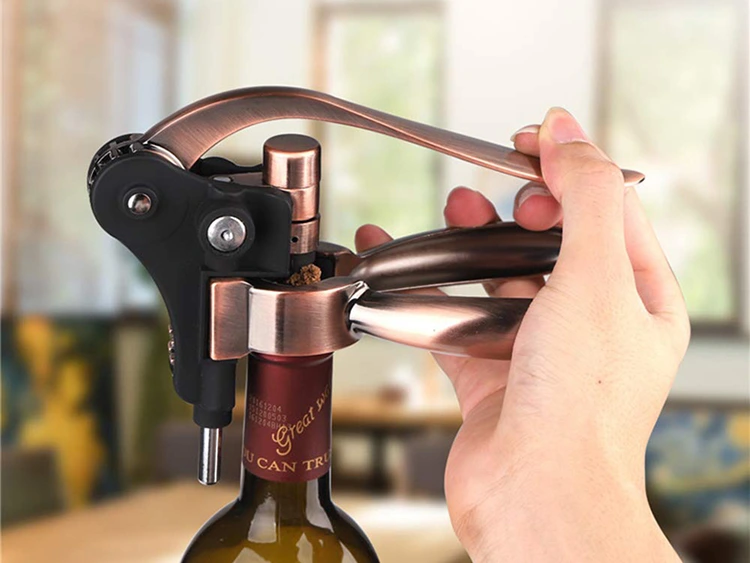
Many traditional wine openers use leverage to reduce the direct force required from the user's hand. In a waiter's corkscrew, the lever rests against the bottle lip while the handle is raised. Double-hinged designs can provide a staged extraction, allowing the cork to be lifted progressively rather than requiring one large movement. :contentReference
Vintage Appearance With Everyday Function
For retailers, appearance can be as important as operation. A vintage-inspired handle, classic metal finish or traditional silhouette can make a basic wine accessory feel more distinctive on a retail shelf or inside a gift set. The practical objective is to preserve useful functionality while adding visual character.
How to Use a Vintage Economy Wine Bottle Opener Step by Step
Correct technique can make a noticeable difference. The following process works for a conventional screw-type wine opener and should be adjusted according to the specific product structure.
Prepare the Bottle
Place the bottle securely on a stable surface. Remove the foil or capsule around the cork so the top of the cork is clearly accessible. Keep the bottle upright during the initial opening process.
Position the Worm
Place the tip of the worm near the center of the cork. Keeping the opener straight helps the worm enter along the cork's axis instead of approaching from an angle.
Twist Smoothly
Rotate the handle gradually while applying controlled downward pressure. Avoid forcing the worm too quickly, particularly when dealing with a cork that appears dry, damaged or unusually firm.
Apply Leverage
Once the worm has sufficient engagement, use the opener's lever or handle according to its design. Pull steadily rather than jerking upward. A controlled motion helps maintain the cork's position and protects the bottle neck.
Remove the Cork
When most of the cork has cleared the neck, finish the extraction gently. If the cork begins to deform, slow down and maintain alignment instead of increasing force suddenly.
For regular bottles, this technique is usually sufficient. Older bottles with fragile corks require greater care because a dry or weakened cork can crumble during extraction. In such situations, specialized two-prong cork pullers are often used because they engage the cork from the sides rather than drilling directly through it. :contentReference
What Buyers Should Check Before Purchasing
For a consumer buying one opener, appearance and comfort may be the main concerns. For a wholesale buyer, the evaluation needs to go further. Product consistency, packaging, material selection, finishing and production capacity can all influence the final commercial result.
| Inspection Point | What to Check | Why It Matters |
|---|---|---|
| Worm | Shape, alignment, surface finish and attachment | Directly affects cork engagement and extraction |
| Handle | Grip, edges, connection and overall feel | Influences comfort and operating control |
| Hinges | Smooth movement and appropriate resistance | Important for repeated opening cycles |
| Metal Finish | Consistency, surface appearance and corrosion resistance | Important for retail presentation and durability |
| Packaging | Individual protection, carton strength and labeling | Reduces damage during storage and transportation |
| Customization | Logo, color, packaging or set configuration | Supports private-label and promotional programs |
For buyers sourcing several thousand units, requesting a sample before mass production is particularly useful. The sample can be checked for actual operation, appearance, packaging dimensions and compatibility with the intended retail positioning.
Comparison With Common Wine Opener Styles
There is no single design that fits every user. Different structures solve different practical problems. A compact opener may be ideal for hospitality staff, while a larger lever model may be more suitable for a home user who prioritizes effortless operation.
| Opener Type | Main Structure | Typical Advantage | Potential Limitation |
|---|---|---|---|
| Vintage Economy Wine Bottle Opener | Traditional screw-based construction | Practical cost, classic appearance and straightforward operation | Manual operation still requires technique |
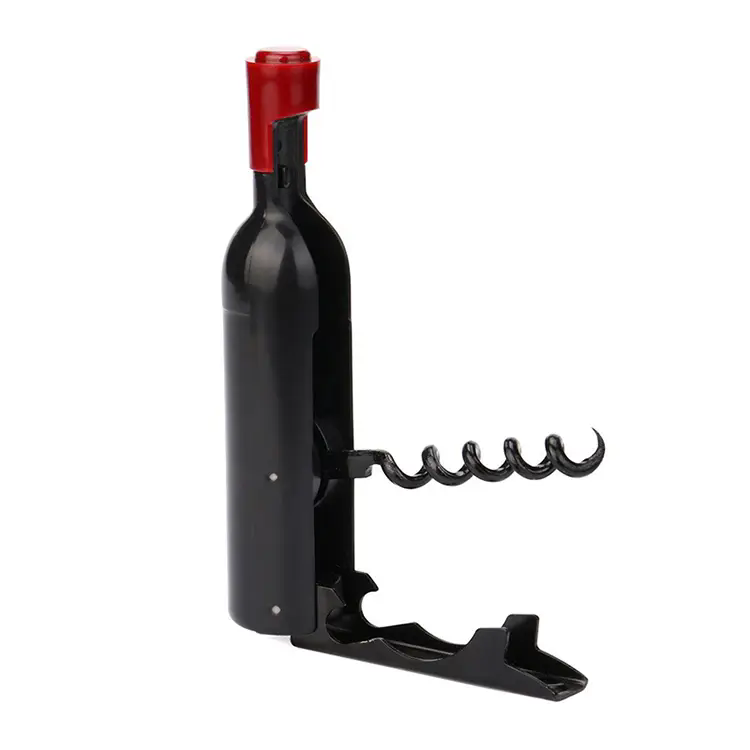
| Waiter's Corkscrew | Folding worm and hinged lever | Compact and portable | Requires practice and controlled leverage |
| Winged Corkscrew | Central worm with two rising arms | Easy visual feedback and familiar operation | Bulkier than compact folding models |
| Lever Corkscrew | Clamping body and long lever | Strong mechanical advantage | Larger storage footprint |
| Ah-So Cork Puller | Two-prong extraction system | Useful for fragile or aged corks | Requires a different technique |
| Electric Wine Opener | Motorized extraction | Minimal manual effort | Higher product complexity and cost |
Waiter's corkscrews, winged corkscrews and lever designs all rely on different forms of mechanical leverage. The choice therefore depends on the intended usage environment, rather than simply assuming that one style is universally suitable. :contentReference
How to Reduce Common Cork Problems
A broken cork is one of the most frustrating problems when opening wine. In many cases, the problem is not simply the opener itself. Cork condition, worm positioning and pulling technique all contribute to the result.
Keep the Worm Centered
An off-center worm can travel toward the side of the cork instead of engaging its middle. This may cause the cork to split or become difficult to extract.
Avoid Excessive Force
Increasing force suddenly can cause the cork to break before it has moved far enough out of the bottle. A gradual pulling motion provides greater control.
Inspect the Cork Before Opening
If a cork looks unusually dry, cracked or damaged, treat it as a higher-risk opening. Older wines may require specialized extraction equipment. A standard screw-type opener is not necessarily the best tool for every aged bottle.
Do Not Rush the Process
Commercial wine service may require speed, but controlled movement remains important. Professional-style waiter's corkscrews can become fast with practice, yet they still require more technique than some larger opener designs. :contentReference
Why the Economy Position Matters for Bulk Buyers
For distributors and retailers, product positioning is closely connected with purchasing cost. Not every customer is looking for a luxury wine accessory. Many buyers simply want a functional opener that looks presentable, works reliably and can be sold at an accessible retail price.
This is where an economy product can occupy a useful market segment. A vintage appearance can add visual interest without requiring an expensive premium construction. At the same time, a simple mechanical structure can make production, inspection, packaging and logistics easier to manage at commercial volumes.
- Retailers: suitable for everyday kitchen and wine accessory collections.
- Wine shops: useful as an accessory alongside bottles, gift sets or tasting products.
- Hospitality businesses: practical for restaurants, bars and event operations where replacement cost matters.
- Promotional distributors: suitable for customized logo and branded gift programs.
- Importers: can be developed around specific packaging, quantity and market requirements.
For wholesale sourcing, the most useful discussion is therefore not simply about unit price. Buyers should also evaluate sample quality, production consistency, packaging efficiency, lead time, customization capability and communication during order fulfillment.
Jinhua Hanjia Commodity Co., Ltd. and Product Supply
Jinhua Hanjia Commodity Co., Ltd. focuses on bottle opener and wine accessory products for customers looking for practical designs suited to different commercial applications. A product such as the Vintage Economy Wine Bottle Opener can be developed around the buyer's target market, packaging requirements and intended sales channel.
For a wholesale project, buyers can discuss details such as product appearance, materials, surface treatment, logo application, individual packaging, carton configuration and order quantities before production. This is especially useful when an importer needs the product to match an existing kitchenware, barware or wine accessory range.
For procurement teams: a successful wine opener project should begin with a clear product specification. Confirm the opener structure, dimensions, material, finish, packaging method and customization requirements before moving from sample approval to bulk production.
Frequently Asked Questions About Vintage Economy Wine Bottle Openers
Is a Vintage Economy Wine Bottle Opener suitable for everyday use?
Yes. A properly constructed manual opener can be used for everyday wine bottles. Its suitability depends on the specific design, materials, construction quality and expected opening frequency.
Can this type of opener be used for different wine bottle sizes?
Most conventional wine openers are designed around common wine bottle neck dimensions rather than a single bottle brand. For commercial sourcing, buyers should provide their intended bottle specifications if a particular bottle format is involved.
Does a vintage-style appearance affect functionality?
Not necessarily. Vintage styling can be applied to the handle, finish or overall silhouette while retaining a conventional corkscrew mechanism. Functionality ultimately depends on the engineering and manufacturing quality of the specific product.
What should wholesale buyers request before placing a large order?
Request a product sample and confirm dimensions, materials, finish, operating feel, packaging, logo requirements, carton details, minimum order quantity and production lead time. This helps identify potential differences before mass production.
Can the opener be customized for a private-label project?
Customization can be discussed according to the supplier's production capabilities. Common possibilities may include logo application, handle treatment, color or finish, packaging design and gift-set configuration.
Is a screw-type opener suitable for old wine?
It can work when the cork remains structurally sound, but very old or fragile corks can crumble during conventional extraction. A two-prong cork puller is often considered for delicate corks because it grips from the sides rather than drilling through the cork. :contentReference
What makes an economy wine opener commercially useful?
The combination of practical operation, consistent manufacturing, acceptable appearance, controlled cost and suitable packaging is important. The lowest purchase price alone does not necessarily provide the best commercial result if product consistency is poor.
Final Considerations
A wine bottle opener may be a small accessory, but its design has a direct effect on the user's experience. The worm must engage the cork effectively, the handle should provide adequate control, and the lever mechanism should transfer force smoothly. These details become even more important when a product is purchased for retail distribution or hospitality use.
The Vintage Economy Wine Bottle Opener occupies a practical space between basic utility and decorative wine accessories. Its vintage-inspired character can add shelf appeal, while its conventional manual mechanism keeps the product straightforward and commercially accessible.
For buyers sourcing wine openers in volume, the right evaluation should cover more than appearance or unit price. Product construction, sample performance, finishing, packaging, customization and supplier communication all contribute to the final purchasing decision.
Looking for a Wine Opener Supplier?
If you are sourcing Vintage Economy Wine Bottle Openers for retail, wholesale, hospitality or private-label programs, Jinhua Hanjia Commodity Co., Ltd. can discuss product specifications, packaging and customization requirements according to your market needs.
Contact us to discuss your product requirements, request samples and explore a suitable supply solution.
Contact Us