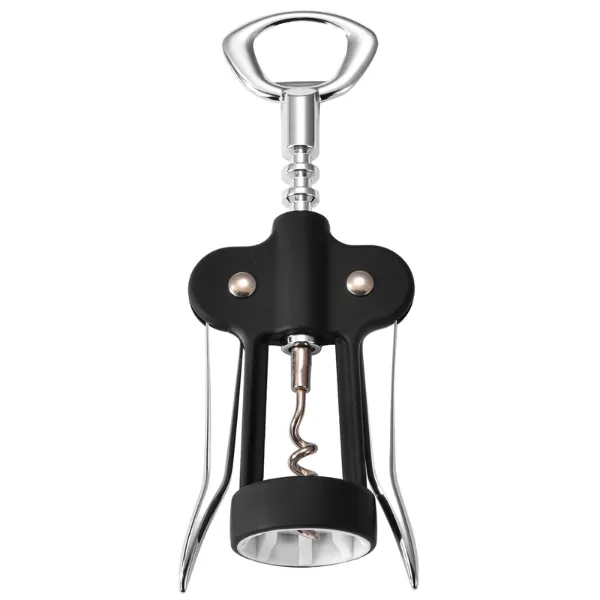

Wine bottle openers play an important role in improving convenience and efficiency in wine service, from home dining and restaurants to hotels, bars, catering businesses, and wine retailers. A well-designed wine bottle opener helps users remove corks smoothly, reduces the effort required during opening, and supports a more consistent serving experience. For hospitality businesses and kitchenware distributors, choosing reliable wine tools can improve daily workflows while providing customers with practical, durable accessories.
As consumer expectations for convenience and product quality continue to evolve, wine accessories are becoming an important category for kitchenware brands and professional buyers. Product design, material selection, manufacturing precision, and quality control all influence the performance of a wine bottle opener. Jinhua Hanjia Commodity Co., Ltd. is a professional kitchenware manufacturer in Zhejiang, China, offering custom manufacturing services for wine tools and other kitchen accessories. Through OEM and ODM cooperation, the company supports buyers looking for dependable products, customized designs, and scalable production.
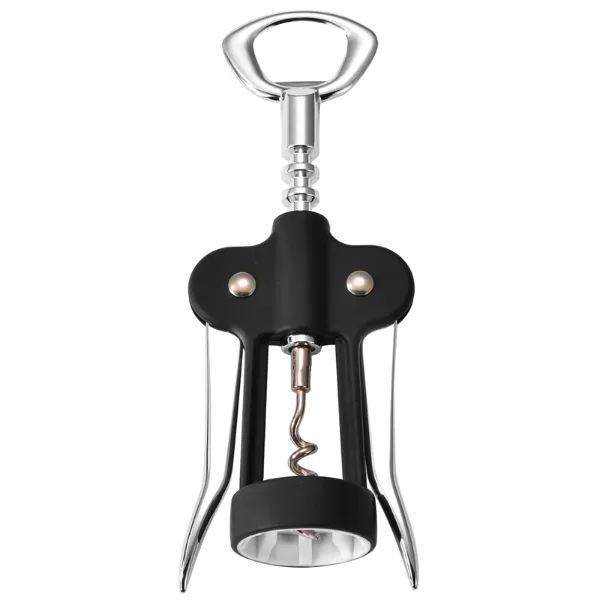
Opening a wine bottle should be a simple and controlled process. However, an opener with an uncomfortable grip, an unstable mechanism, or an unsuitable corkscrew design can make cork removal difficult. These issues become more noticeable in restaurants, hotels, and catering environments, where staff may need to open multiple bottles during busy service periods.
A properly designed wine bottle opener can reduce the physical effort required to remove a cork and help users maintain better control throughout the process. Ergonomic handles, well-positioned leverage points, and durable metal components can make the opening process more comfortable and predictable. For professional wine service, these features can help staff work efficiently while maintaining a smooth customer experience.
Different users also have different requirements. Home users may prioritize compact storage and simple operation, while restaurant staff often need a reliable tool that is easy to carry and suitable for repeated use. Wine retailers, gift suppliers, and kitchenware distributors may focus on appearance, packaging, product variety, and customization options. Selecting the right wine bottle opener design helps businesses meet these different needs.
Wine bottle openers are available in several designs, each offering advantages for particular users and service environments. Understanding the differences helps importers, wholesalers, and hospitality buyers choose products that match their intended applications.
| Wine Bottle Opener Type | Main Advantages | Typical Applications |
|---|---|---|
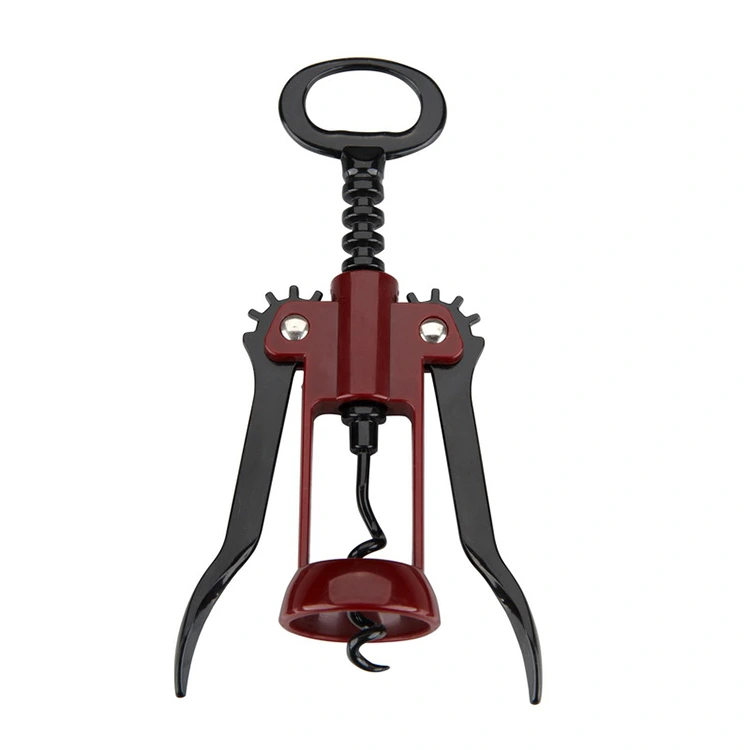
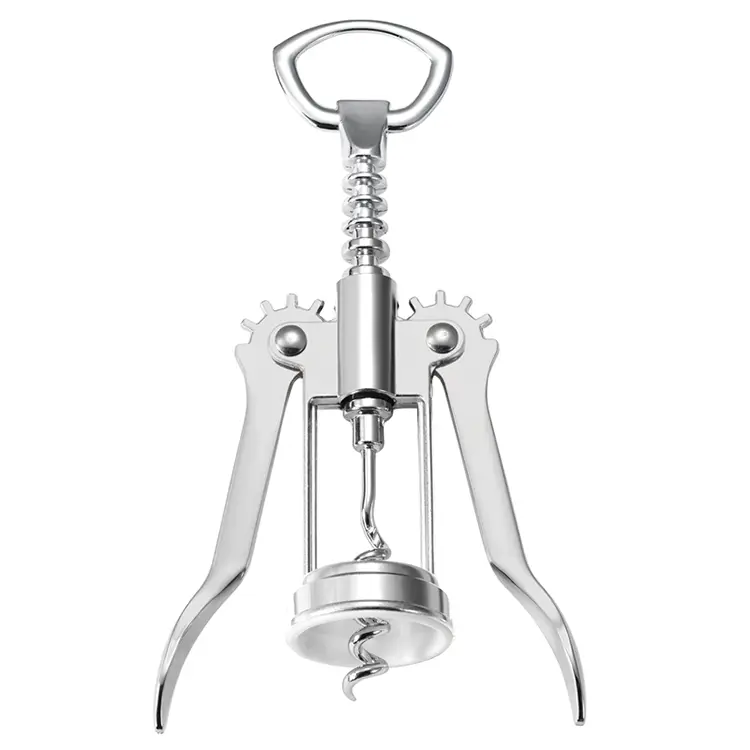
| Waiter's Corkscrew | Compact structure, portable design, and leverage-assisted cork removal | Restaurants, bars, hotels, catering, and home use |
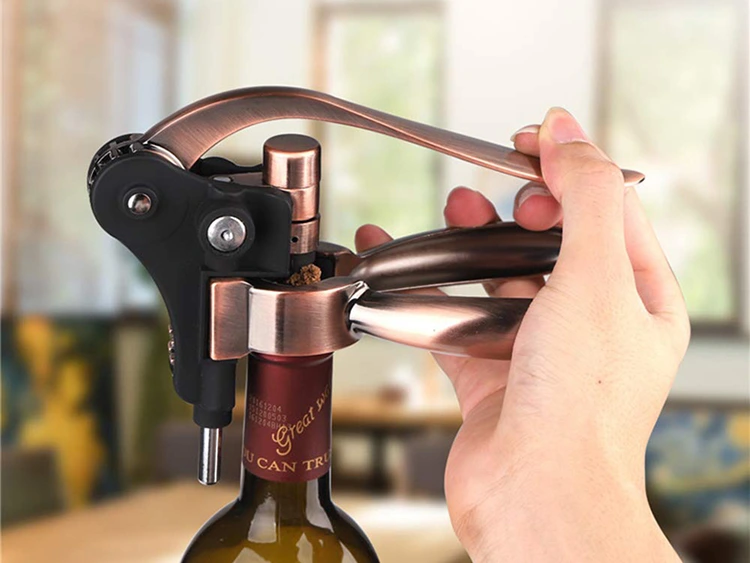
| Lever Wine Opener | Leverage-based operation designed to simplify cork extraction | Home wine collections, hospitality settings, and frequent wine service |
| Wing Corkscrew | Familiar operating mechanism with raised handles that assist cork removal | Households, supermarkets, and general kitchenware retail |
| Electric Wine Bottle Opener | Motorized operation that reduces manual effort | Home entertaining, gift markets, and convenience-oriented product ranges |
The best choice depends on the user's experience, opening frequency, budget, and preferred operating method. For example, a compact waiter's corkscrew is convenient for restaurant staff because it can be carried easily, while an electric model may appeal to consumers who prefer automated operation. For distributors, offering multiple designs can help address a broader range of customer preferences.
Material selection directly affects the durability, appearance, weight, and operating feel of a wine bottle opener. The tool must withstand the forces involved in cork extraction while remaining comfortable to handle. Weak structural components, poor surface finishing, or inconsistent assembly can reduce service life and affect the user's experience.
Red wine bottle openers manufactured by Jinhua Hanjia use materials such as zinc alloy, stainless steel, and plastic, depending on the product design. Each material serves a different purpose. Zinc alloy can support decorative shapes and a solid feel, stainless steel is commonly used for functional metal components, and plastic can provide lightweight handles or other molded parts.
| Material | Potential Benefits | Manufacturing Considerations |
|---|---|---|
| Zinc Alloy | Suitable for detailed shapes, decorative finishes, and substantial product designs | Casting quality, surface preparation, plating consistency, and structural integrity |
| Stainless Steel | Corrosion resistance and strength for suitable grades and applications | Grade selection, forming precision, surface finishing, and resistance to repeated use |
| Plastic | Lightweight construction, design flexibility, and a range of color options | Material grade, molding consistency, grip comfort, and mechanical durability |
For kitchenware brands and importers, evaluating the complete product is just as important as checking individual materials. Handle comfort, screw alignment, joint strength, corrosion resistance, and surface quality can all affect long-term satisfaction. When a product includes materials or components intended for food contact, the applicable materials and finished product should be evaluated against the relevant regulatory requirements and testing standards for the destination market.
Manufacturing processes influence the consistency and functionality of wine bottle openers. Different parts may require different production methods to achieve the desired geometry, strength, appearance, and cost. Stamping is commonly used to form metal components, die casting can produce complex metal shapes, and injection molding enables the manufacture of plastic components with repeatable dimensions.
For metal parts, accurate tooling and controlled forming processes help maintain dimensional consistency and reliable assembly. Die-cast zinc alloy components may undergo polishing and electroplating to achieve the desired appearance. Stainless steel parts require suitable forming and finishing processes based on their design and intended use. Plastic handles and components depend on appropriate mold design, material selection, and injection molding conditions.
Jinhua Hanjia Commodity Co., Ltd. combines stamping, die casting, injection molding, and subsequent finishing and assembly processes according to product requirements. The use of dedicated molds for individual components helps support repeatable production, while polishing and electroplating can improve the surface appearance of selected models. Process selection should be matched to the specific product design rather than applying the same manufacturing method to every component.
For buyers sourcing wine bottle openers in bulk, understanding these processes helps with supplier evaluation. Consistent production methods, controlled tolerances, and clear inspection procedures can reduce assembly problems and support stable product quality across repeat orders.
A wine bottle opener may appear to be a simple kitchen accessory, but its performance depends on the interaction of several components. The corkscrew must engage the cork effectively, the handle must provide a secure grip, and the operating mechanism must transfer force without excessive movement or instability. Quality control throughout manufacturing helps identify defects before products reach customers.
A comprehensive inspection process can include incoming material checks, dimensional inspection, surface appearance assessment, assembly verification, and functional testing. Depending on the design, manufacturers may also evaluate operating force, repeated-use durability, corrosion resistance, and the consistency of moving parts. These checks help buyers assess whether a product is suitable for its intended market and usage frequency.
Jinhua Hanjia reports a quality management process covering product design, mold development, material selection, mass production, and final inspection. The company also reports ISO certification and a Business Social Compliance Initiative audit. Buyers should verify the current certificates, audit scope, and validity when these credentials are requirements for a sourcing project.
For wholesalers and private-label brands, reliable quality control can help reduce customer complaints, returns, and inconsistencies between production batches. Clear product specifications, approved samples, documented inspection criteria, and traceable production records are useful foundations for long-term supplier cooperation.
As competition grows in the kitchenware and wine accessories markets, brands increasingly look for products that reflect their positioning and appeal to specific customer groups. OEM and ODM manufacturing allows buyers to develop wine bottle openers with customized colors, materials, finishes, packaging, logos, and product configurations according to the capabilities of the supplier and the requirements of the project.
OEM services generally focus on manufacturing products according to a buyer's established design and specifications. ODM services can involve a broader contribution from the manufacturer, including product design, development, mold creation, and sample preparation. The exact scope depends on the agreement between the buyer and supplier.
Jinhua Hanjia Commodity Co., Ltd. provides OEM and ODM services for kitchenware products, including wine tools. Its product development and production teams can work with buyers from initial project discussions through sampling and mass production. With a factory area of approximately 20,000 square meters, dedicated production equipment, and five assembly and packaging lines, the company provides a manufacturing base for customized product projects.
Customization can help brands create coordinated wine accessory collections, develop promotional gifts, or differentiate products for retail and hospitality customers. Before mass production, buyers should confirm drawings, materials, color references, packaging specifications, sample approval, minimum order quantities, lead times, and inspection requirements. These details help align expectations and reduce avoidable changes later in the project.
Choosing a suitable wine bottle opener manufacturer requires more than comparing quotations. International buyers should evaluate the supplier's technical capabilities, manufacturing processes, quality management, customization options, communication, and ability to maintain consistent production.
For buyers serving different markets, product requirements may vary according to retail positioning, intended usage, local regulations, and customer expectations. Defining these requirements early helps manufacturers recommend appropriate designs and production methods.
Jinhua Hanjia Commodity Co., Ltd. is based in Tongqin Industrial Zone, Wuyi, Zhejiang Province, China. The company specializes in kitchenware and wine tools, with product categories that include wine bottle openers, corkscrews, kitchen utensils, nutcrackers, and peelers. Its integrated product development, manufacturing, and sales system supports cooperation with domestic and international buyers.
The company reports ten sets of production equipment, two technical processes, and five assembly and packaging lines. Its manufacturing operations cover product development, mold creation, material selection, production, finishing, assembly, and final inspection. The company also reports holding more than 50 trademarks and product patents, demonstrating experience in product development and intellectual property.
Jinhua Hanjia states that it has obtained ISO certification, passed a BSCI audit, and offers products designed to meet applicable international food-contact safety and environmental requirements. The company references testing and verification through organizations such as SGS and TÜV. Buyers should request the relevant reports and confirm that the tested product, material, and intended use fall within the required compliance scope.
For brands, wholesalers, importers, and promotional product suppliers, working with a manufacturer that can coordinate product development, production, and packaging may simplify sourcing. By defining product specifications and quality expectations at the beginning of a project, buyers can establish a clearer path from sample development to repeat orders.
Wine bottle openers improve convenience and efficiency in wine service through practical design, comfortable handling, reliable mechanisms, and consistent manufacturing quality. The right opener can make cork removal easier for home users and hospitality professionals while helping distributors serve different customer groups. Material selection, stamping, die casting, injection molding, surface finishing, and quality inspection all contribute to the final product's functionality and appearance.
For businesses looking for a wine bottle opener manufacturer in China, Jinhua Hanjia Commodity Co., Ltd. offers wine tools and custom kitchenware manufacturing services, including OEM and ODM cooperation. From product development and material selection to mass production and packaging, the company supports buyers seeking customized wine bottle openers for retail, hospitality, promotional gifts, and wholesale distribution. Careful supplier evaluation and clear product requirements can help brands build reliable product lines and establish long-term manufacturing partnerships.
-